
The Caspian’s New Strategic Alliance: Uzbekistan and Azerbaijan Reinforce the Middle corridor
The planned establishment of a joint Caspian fleet and a joint venture between Uzbekistan’s Temiryo’lkargo and Azerbaijan Caspian Shipping Company (ASCO) marks a significant step in strengthening the Middle Corridor (Trans-Caspian International Transport Route – TITR).
Vladimir Norov
7/18/20261 min read
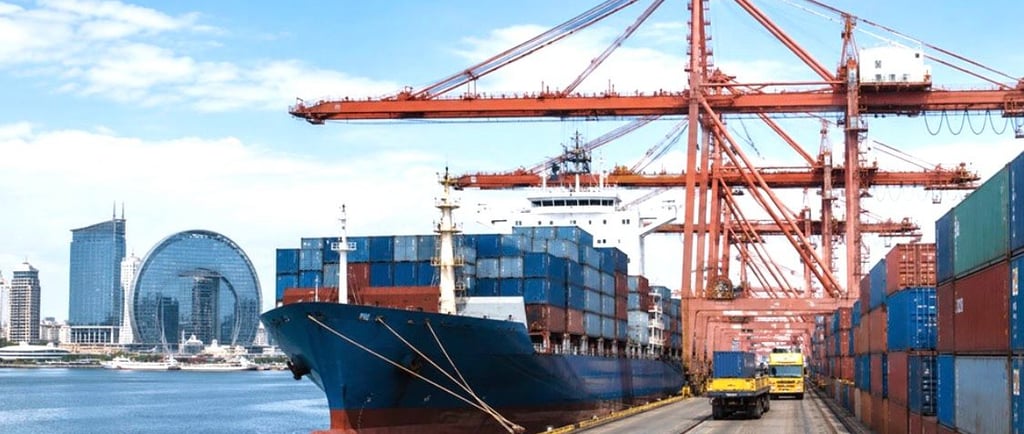
The planned establishment of a joint Caspian fleet and a joint venture between Uzbekistan’s Temiryo’lkargo and Azerbaijan Caspian Shipping Company (ASCO) marks a significant step in strengthening the Middle Corridor (Trans-Caspian International Transport Route – TITR).
Key takeaways:
🔹 From concept to integration: The initiative transforms the Middle Corridor from a transit route into a more integrated multimodal logistics system.
🔹 Strengthening Azerbaijan’s role: Azerbaijani experts and media view the project as reinforcing Azerbaijan’s position as the principal maritime and logistics hub connecting Central Asia with Europe through the Port of Baku.
🔹 Greater efficiency: A joint fleet is expected to improve vessel availability, reduce transit times, lower logistics costs, and enhance the reliability of multimodal transport.
🔹 Strategic benefit for Uzbekistan: Participation in maritime transport provides Uzbekistan with greater control over export logistics and more competitive access to European and global markets.
🔹 Institutional cooperation: Beyond transport, the project creates a long-term partnership through joint ownership, coordinated fleet management, and integrated logistics planning.
🔹 Regional connectivity: The initiative supports deeper economic integration between Central Asia and the South Caucasus while strengthening east-west trade across the Caspian Sea.
🔹 Economic impact: Expected outcomes include increased cargo volumes, higher utilization of the Port of Baku, improved competitiveness of exporters, and greater resilience of Eurasian supply chains.
As Azerbaijani analysts note, this is more than a shipping agreement—it is another important step toward building a stronger, more connected, and more competitive Middle Corridor